
The best and healthiest type of saffron is organic saffron, which does not use chemicals in any of its planting, growing, or harvesting stages. Of course, the challenges of producing organic saffron are not few, and only biological methods and natural fertilizers must be used in its production.
The intense red color and soft, flexible texture are two ways to identify organic saffron, and the lack of use of chemicals and pesticides is the most important difference between organic saffron and regular saffron.
Organic saffron and why it is valuable
As you know, no chemicals are used in the production of organic agricultural products at any stage of production. Organic saffron is no exception to this and no chemicals are used in all stages of its production, including planting, growing, harvesting, and processing.
Since every agricultural product requires fertilizer for growth and nutrition, only compost, natural fertilizers, and biological methods are used to produce organic saffron.Of course, the challenges of organic saffron production should not be ignored, because saffron production involves many sensitivities and farmers face numerous challenges in producing organic saffron.
Of course, it should be kept in mind that due to the difficulty of producing organic products, their cost is also high, and on the other hand, only people who are familiar with the method of identifying organic saffron can distinguish it from regular saffron. Below, we will discuss the challenges of producing organic saffron.
Challenges of organic saffron production
Although organic saffron production in Iran has high potential, it faces many challenges. Some of these challenges include:
1. Pest control
One of the first challenges of organic saffron production is pest control without the use of chemicals. In organic farming, farmers must be able to fight diseases and pests without using any chemicals.In other words, farmers should be able to control pests and diseases using natural methods, and this is one of the differences between organic saffron and regular saffron.
One of the challenges in this field is that for weak soils and humid areas, this requires great care and management, because problems caused by diseases and pests will reduce the quality of the product.
2. Challenges of organic saffron production: High cost of production
Because organic saffron production requires high financial, human, and time resources, the cost of production and, consequently, its price will be higher. Using natural materials for all stages of production, providing organic agricultural inputs, organically modified seeds, and using safe pesticides all involve high costs.It can be said that in addition to the apparent quality, the high price is also a way to identify organic saffron.
3. Climatic conditions and irrigation
Another challenge in organic saffron production is related to climatic conditions, ambient temperature and irrigation. Saffron is a sensitive plant that requires specific conditions to grow, and these conditions are made more complex for organic saffron cultivation. Lack of nutrients to strengthen the soil and plant growth and lack of water can negatively affect organic saffron production.Although saffron cultivation does not require much irrigation, optimal and proper use of water resources is essential for organic saffron cultivation.
4. Obtaining a production certificate
There are strict rules for obtaining certification for organic saffron cultivation, and doing so requires adhering to specific standards and strict rules.In addition, regular and careful monitoring must be carried out in the production process, and lack of adequate monitoring in the planting, storage, and harvesting process will lead to a decline in product quality and, as a result, the loss of the organic saffron production certificate.
Given these issues and challenges of organic saffron production, the standardization processes and regular and detailed monitoring have many complexities and challenges, all of which directly affect the final cost. Of course, this is separate from the method of identifying organic saffron by testing the appearance of the product.
5. Marketing and competition
As mentioned, one difference between organic saffron and regular saffron is its high price. For this reason, regular consumers are less willing to buy it, and the issue of competing with non-organic saffron is another challenge in organic saffron production.To succeed in this, branding, marketing, and effective marketing strategies are very important, and the lack of effort for effective marketing in competition with conventional saffron is another challenge in producing genuine and organic saffron.
6.Expert manpower
Another difference between organic saffron and regular saffron is the use of specialized human resources. Farmers who plant organic saffron must have sufficient knowledge, skills, and expertise in this field.For this purpose, farmers and workers working in this sector must undergo the necessary training related to the techniques and principles of organic agriculture. Training costs and the unwillingness of human resources to train are another challenge in organic saffron production.
Challenges of producing organic saffron; Benefits of using organic saffron
Saffron is a very important and valuable agricultural product that has many properties for the body. In addition to saffron’s medicinal properties, this unique food ingredient has a special place in cooking.Among them, organic saffron has a privileged position and by using the organic saffron identification method, you can purchase a pure natural product. The most important benefits of organic saffron are:
1. Sustainable agriculture
Despite the challenges of organic saffron production, cultivating this important crop in a completely organic manner preserves soil quality and makes optimal use of natural agricultural resources.Of course, it should be noted that this process requires the implementation of important processes that many farmers usually refuse to undertake, resulting in reduced organic saffron production.
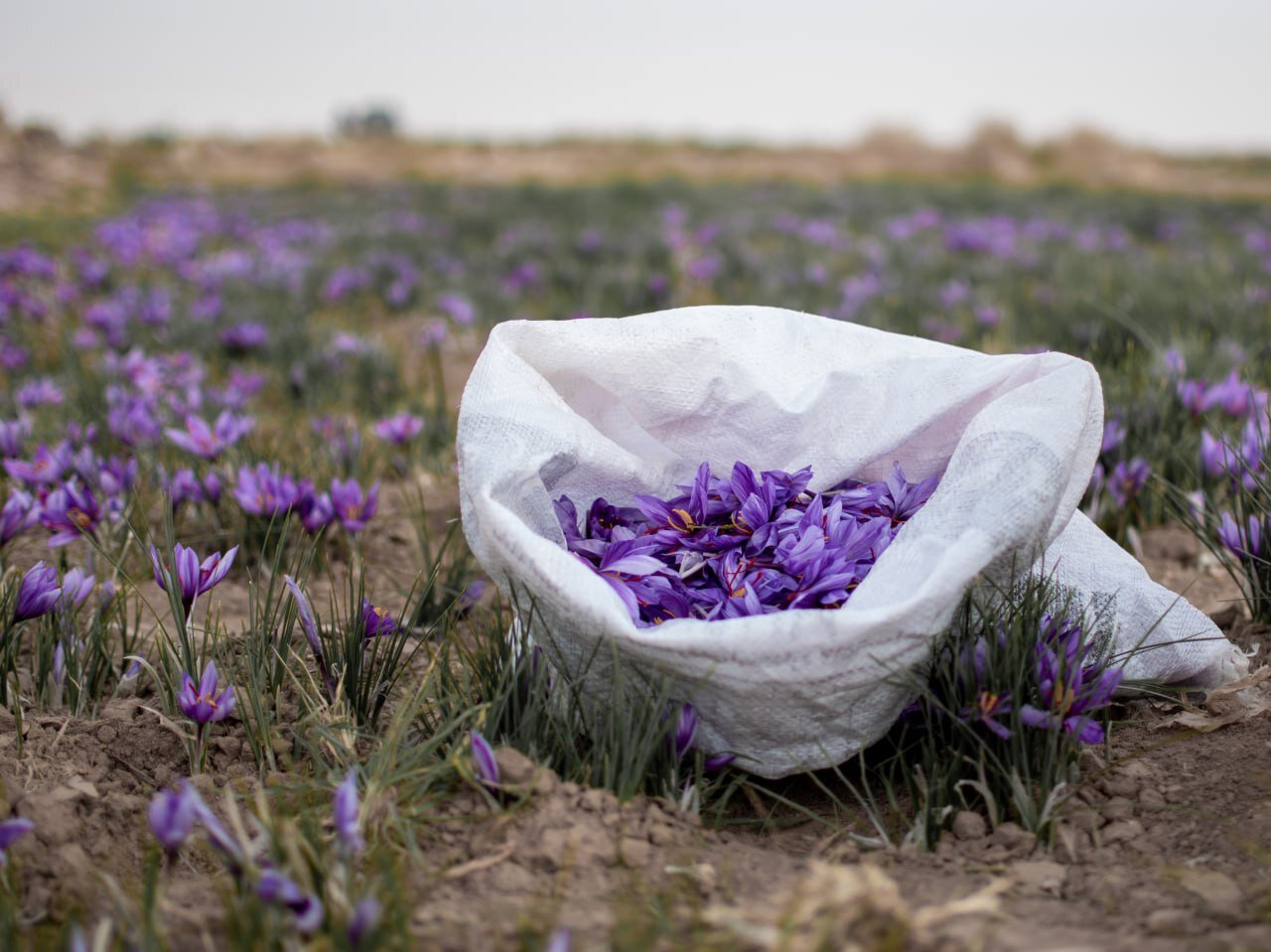
The challenges of producing organic saffron
2. Environmental protection
Another advantage of organic saffron cultivation is the preservation of environmental resources such as soil and groundwater, because the lack of use of chemical fertilizers and pesticides protects the soil and groundwater from chemical pollution. In addition, organic saffron cultivation will reduce greenhouse gases and improve biodiversity.
3. Health
Although there are many challenges to producing organic saffron, producing this type of saffron product can be very beneficial for consumers.Considering the benefits of saffron for various systems and parts of the body, such as treating neurological diseases, the effect of consuming saffron on the immune system, improving mood, the digestive system, etc., consuming organic saffron has more properties than the non-organic type. This is also due to the elimination of toxins resulting from the use of chemicals in the production stages.
How to identify organic saffron
For the production of organic saffron, special facilities should be provided for farmers and producers so that they can perform successfully in this field and many of the challenges of organic saffron production are removed from their feet.Although organic saffron production is a difficult, time-consuming, and costly process, facilitating this process for farmers can be highly profitable for the country. Among these, there are also methods for distinguishing organic saffron from regular saffron that can be easily done by skilled people.
Appearance is the first thing to look for in organic saffron. Soft and flexible texture with a bright red color are the first signs of organic saffron. Having a natural aroma and flavor and not breaking the threads are other appearance characteristics of this product. Below, we will examine the various methods for identifying organic saffron in detail.
1. Color and texture
Perhaps one difference between organic saffron and regular saffron is its intense red color, because due to the lack of use of chemical fertilizers and pesticides, the color of this type of saffron is redder than the regular type.In addition, the soft texture is another way to identify organic saffron, and if carefully considered and monitored, it has an attractive appearance and can reflect light. Although the challenges of producing organic saffron are not few; but the production of such a product can encourage farmers due to its high profitability and health benefits such as the effect of consuming saffron on reducing anxiety.
2. Challenges of organic saffron production: aroma and flavor
Due to the lack of use of any genetically modified materials, toxins, and chemical pesticides in the production of organic saffron, this product has a very special and unique aroma and color.Paying attention to the aroma, taste, and smell is one way to distinguish organic saffron from regular saffron. Although genuine and organic saffron has a bitter and deep taste, a special sweetness and tenderness can be felt in its veins, which is perhaps only a subtle difference between organic saffron and regular saffron that only experts can properly recognize.
3. Packaging type
Packaging can also be considered another challenge in the production of organic saffron, as well as the method of distinguishing organic saffron from regular saffron. The challenge is that the packaging of organic saffron must be unique and specific labels must be placed on them.
These labels should include information about organicity and the authenticity of the source and product, along with the date and place of production. On the other hand, this method can help you distinguish between organic saffron and regular saffron.