
The differences in the taste profiles of real and fake saffron are pronounced. Fake saffron—which is often colored with red food coloring or other foreign substances —will either lack flavor entirely or have a bitter metallic taste. On the other hand, real saffron will have a strong floral scent and the will have a floral and earthy taste, the kind of flavor you’re looking for saffron to impart.
What is Saffron?
Saffron is the harvested stigma of the autumn crocus flower, also known as the saffron crocus. Each flower produces only three stigma at a time, meaning it takes between 50,000 and 75,000 flowers to produce just 1 pound of saffron spice. To put it another way, that pinch of saffron you’re throwing in your paella? Those twenty-ish stigma have come from seven different flowers.
Once the stigma has been harvested, the actual flower is used in a number of ways. Saffron has been used for hundreds of years to treat extensive number of ailments, including asthma, cough, heartburn, insomnia, depression, Alzheimer’s disease, dry skin, and cardio-vascular ailments. In some areas of the world, people apply saffron directly to the scalp as a cure for baldness. Beyond its health benefits, saffron extracts are used for fragrance in perfumes, as a dye for cloth, and of course, as a flavoring for food.
Parts of Saffron
The sargol and negin are the highest quality parts of the saffron stigma. These parts are the best portions due to the fact they they contain all of the stigma’s stores of picrocin and safranal, the organic chemical compounds that make saffron such a unique ingredient. Picrocin is the compound that gives saffron its bitter taste.
When real, high-quality saffron is harvested, the sargol and negin are harvested by carefully removing the style of each thread, in order to ensure only the most potent and delicious parts of the saffron make it to the consumer. This is done prior to drying the saffron such as to ensure that the finished product has its distinct deep red color. It is paramount to remove the style prior to drying because, as many of those that have used saffron before know, the final saffron thread is frail and delicate, and removing the yellow style after drying would be difficult.
Traditionally saffron was harvested by hand in farmers homes. This makes it difficult to ensure consistent quality.
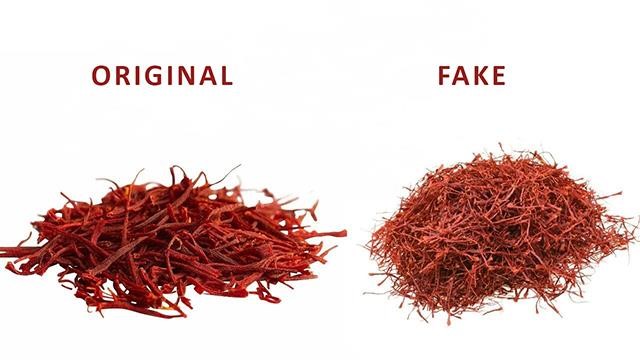
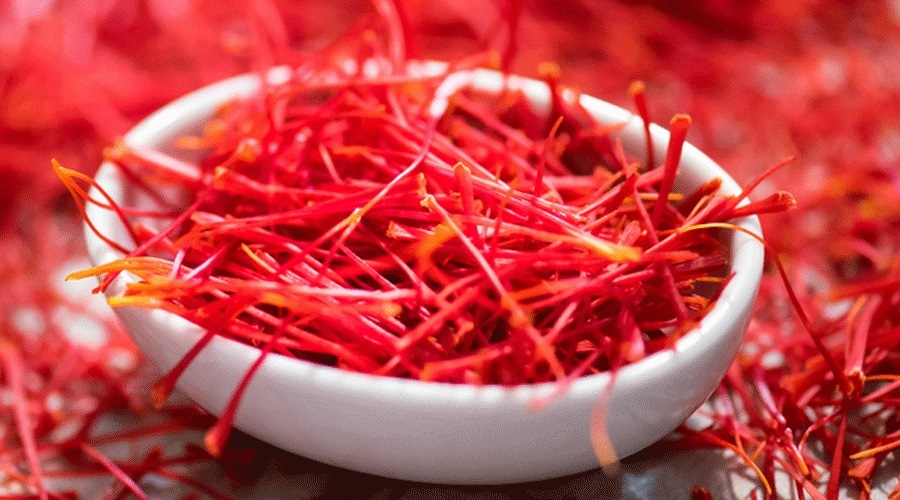
It’s important to know that some yellow should be present in the dried stigmas. If the saffron is completely red, that’s usually a good indicator that the supplier dyed the batch to cover up impurities or low quality. Additionally, avoid saffron that looks frayed, worn or has a plenty of pale streaks—these are also an indicator of poor quality. The best saffron should be a deep red with orange/yellow tips.
How is Saffron Quality Tested?
The International Organization for Standardization (“ISO”) is an independent global network of the over 160 of the world’s foremost standards bodies who are the developers and publishers of standards for everything from sterilization of medical devices to instant coffee standards. These standards are set when experts from all over the world come together to develop international standards and help ensure interoperability, such as with telecommunication standards like 4G, or a uniform method of judging the rank between similar products, such as saffron.
ISO Standard 3632 is the standard that pertains solely to the measurement of saffron quality. The standard consists of 2 parts, ISO 3632-1 and ISO 3632-2, which specify the test methods for the different classifications of dried saffron, including threads, cut threads, and powder. These standards’ main purpose is to test the strength of the saffron’s flavor, scent, and color; this helps protect consumers from fake saffron which is expensive but offers limited culinary value. Additionally, the standard also tests the drying method of the saffron; poorly dried saffron will retain moisture and as such, weigh more offering an additional aspect of deception to the end consumer.
Recognize Saffron Quality
How Can I Measure Saffron Quality?
Once you’ve purchased saffron, there is a simple experiment you can perform to test your saffron’s quality: Take a few saffron threads and soak them in hot (not boiling) water for 5 to 20 minutes.
Fake saffron will quickly bleed out its artificial red dye and the threads will disintegrate. Real saffron will remain intact in the warm water and will emit an even and uniform yellow color throughout the water.
You can also test the differences in the taste profiles. The test water of the fake saffron will either lack flavor entirely or have a bitter metallic taste. Real saffron will have a strong floral scent and the test liquid will have a floral and earthy taste, the kind of flavor you’re looking for saffron to give.
In fact, the test water can be used directly in your cooking to add the complex and nuanced flavor of saffron to your recipe. This is one of the most common methods of cooking with saffron.
Six tests to identify real/pure saffron
- Smell – Many authorities describe the smell of saffron as sweet. I would say it reminds me of paella – a distinctive smell that is not entirely sweet. Rather, I find it both sweet and husky. It is no surprise that saffron brings paella to mind. That dish include saffron in the rice and the addition of the spice gives paella an unforgettable aroma. For examples of how to use saffron in paella rice, check out this seafood paella or this chicken, mushroom and shrimp paella, both from José Andres. One saffron producer describes the aroma of real saffron as “a blend of earth, tobacco, vanilla, honey, salty sweet.”
- Appearance – Saffron threads are trumpet-shaped. If a thread does not bulge at one end, it’s a fake. If you rub real saffron between your fingers, your skin will turn yellow/orange.
- Taste – While saffron smells sweet, it tastes slightly bitter, not sweet.
- Time for color release in water – Put the threads in a small container of tepid water. Wait at least 15 minutes. Real saffron slowly turns the water yellow. The color change may take up to an hour. The saffron threads themselves retain their red color. If the water changes color immediately or turns red or does not change color, or if the threads lose their color, the substance is not saffron. As you can see, the Hungarian “saffron”did not color the water. That was a sure sign it was not real. Also, after they soak, real saffron threads will remain intact if you rub them between your fingers. Fakes on the other hand, tend to fall apart.
- How it reacts in baking soda – I haven’t tried this, but several authorities suggest mixing saffron and baking soda in a small container, then pouring water over the mixture. If it turns yellow, the substance is real saffron.
- Price – If it is not too expensive, there’s a good chance it is not real saffron. As my mother taught me, if it seems too good to be true, then it probably is (too good to be true.) I should have doubted the Hungarian substance from the beginning, just based on this price test.
Tips for buying saffron
- Never buy ground saffron. Although your recipe may call for ground, if you buy it in threads, at least you can figure out if it is real. Once the substance is ground, it is almost impossible to distinguish real from fake or adulterated. Plus ground saffron, even if real, can contain fillers such as dyed rice flour, starch or other spices such as turmeric or paprika.
- Maybe it goes without saying, but it never hurts to remember that you should buy from a reputable source. That source can either be a store you trust or an online seller you have vetted.